Beginnings
In 1908 Louis Coodin, the eldest son of Herschel and Elka, arrived in Canada with $11. We don’t know how he survived for the first few years, but by 1912 he had learned enough English to find employment, first as an insurance agent and then as a Singer sewing machine salesman.
We know from passenger manifests, that the tiny nest egg carried across the Atlantic by Louis was typical of the amounts brought by his parents, uncles, aunts, and cousins who emigrated over the next two decades. Louis’ aunt Miriam and her husband Isaac Bakalinsky arrived with $10. Raful and Chaia Coodin had $25. Freda Coodin had $2. Jacob (son of Leib and Sarah), was the wealthiest immigrant among the Coodins, arriving with the sum of $300.
The stream of Coodin immigrants who disembarked in Halifax, St. John and Quebec City and then took the long train ride to Winnipeg were often dependant at first on kin who had already established themselves. The Kiev Free Loan Society was instrumental in helping Jewish immigrants from the Kiev region become self-sufficient by providing interest-free loans. This society was founded in Winnipeg in 1914. Several Coodins were active members.
The Kudinskys were millers in the old country. A few of them had opportunities to continue this trade in Winnipeg – see The Kudinsky Family Milling Tradition. But most found other ways to make a living.
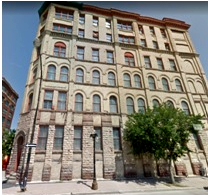
Silver Dress Ltd. was on the top floor
Young Women Working in Factories Daughters provided crucial income for newly arriving families by going to work in factories virtually right after stepping off the boat. Many of these young women took jobs in Winnipeg’s booming garment industry. Mania Coodin arrived with her parents Nesanel and Rachel, in 1929 at the age of 22. That same year she was working at Monarch Overall. The next year she moved to Silver Dress Limited. Winnipeg’s shmateh factories were notorious for their poor lighting, inadequate heating and lack of ventilation. Silver Dress was on the top floor of a six storey building. The summer heat must have been stifling. These sweatshops were incubators of radical labour activity – see Freda Coodin.
At the age of 14, Bertha Coodin (daughter of Herschel and Elka), worked as a box maker at Hitchings Paper Box Co. Five years later, still living with her parents, she was a telephone operator at Eatons. Meanwhile, her older sister Chaykeh worked as a seamstress at Smart Woods Ltd. The factory was located at 145 Pacific Ave. This building now houses the Manitoba Sports Hall of Fame.
Some Jewish immigrants worked in Winnipeg’s fur factories. In 1930, Bessie Coodin (Raful and Chaia’s daughter) had a job at the Morris Ludwig Furriers. Freda Coodin received $6 a week for working at A & M Hurtig Fur Company.
Coodin Factory Owners
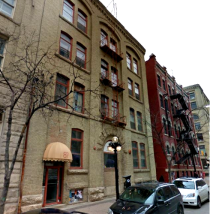
Some of the immigrant Coodins took an ownership interest in garment and fur factories. Before joining his father Nesanel’s milling business, Max Coodin was a proprietor of Superior Fur Cap. Percy Bakalinsky went into the fur business with a brother-in-law. Their company, Manitoba Cap Manufacturing specialized in “Aviator and Fur Caps.” This business was not enough to keep Percy and his family in Winnipeg. They moved to Los Angeles in 1948.
Leib Coodin (son of Nesanel and Rachel) immigrated in 1924 and within a few months was working as a baker earning $90 a month. But he saw better opportunities in the fur and garment industries. In 1929 he was manager at Perfect Fur Cap. Later, Leib and two partners opened Service Sportswear Manufacturing Ltd., located at 87 King St.
Mom and Pop Groceries
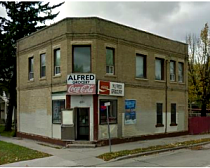
Several Coodins went into the grocery business shortly after arriving in Winnipeg. Typically, these stores were located in small buildings with an apartment on the second-floor where the family lived. For a few years after arriving in Winnipeg Jacob and Mania Coodin operated a corner grocery store at Alfred and McGregor. They lived upstairs with their children. A grocery still exists at that address. Later the family moved to 1375 Main Street where once again they had a grocery store and lived upstairs.
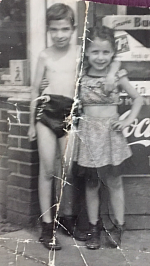
Jacob’s uncle and aunt, Nesanel and Rachel Coodin also operated a small grocery and lived above it. This building, at 711 Selkirk Avenue still exists, though in modified form. By 1936, Nesanel and Rachel had retired, but a few years later Nesanel found a second career as an inspector for the Retail Kosher Butcher Association.
In the Bakalinsky branch of the family, Harry & Clara, Sam & Frances, and Beryl & Dora all owned small groceries.
Raful and Chaia’s daughter Bessie married Pesach Tabachnick. The two of them lived upstairs with their three sons at the corner of Flora and Robinson and operated a grocery store on the main floor. Pesach also had a job with a bakery making early morning bread deliveries on a horse drawn wagon – a tough job during Winnipeg’s frigid winter mornings. Bessie and Pesach’s store was across the street from the big Chicago Kosher factory which supplied Jewish grocers with products such as smoked goldeye, shmaltz herring and its signature Blue Label Salami. Pesach Tabachnick was not the only member of the Coodin clan to deliver bread. Alex Coodin was a driver for City Bread.
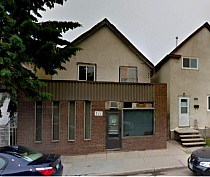
Mom and pop businesses weren’t restricted to grocery stores. Leib and Sarah Coodin’s daughter Rachel and her husband David Roitman ran a coffee shop. David was also a part-time cantor who, over the years worked at many of Winnipeg’s synagogues.
The First Professional
Canadian born Coodins became doctors, teachers, dentists, social workers and other professionals in significant numbers. But only one member of the family who lived his childhood in the old country entered a profession in Canada. In 1913 Pesach Coodin arrived at the age of 15 with his parents Herschel and Elka. After graduation from St. John’s High School in Winnipeg, his work and studies caused him to move about a great deal. He taught Hebrew in Calgary where he met his wife Libby Margolis, continued teaching in Superior Wisconsin, studied medicine back in Winnipeg, practiced in Saskatchewan, took post graduate studies in Vienna, practiced in Fort William, and finally in 1948 returned to Winnipeg with his family where he practiced medicine for many years.
Coodin Descendants
The immigrant Coodins worked in a multitude of occupations. They left their descendants with sound foundations for succeeding in their chosen fields.
Story by Mark Kreger